THE ROOM WHERE IT HAPPENS
I’ve been editing film for over 40 years. I can’t not be cutting something. Feature films. Music videos. Documentaries. But, mostly trailers, lots and lots of movie trailers... and the occasional studio executive kid’s preschool talent show…
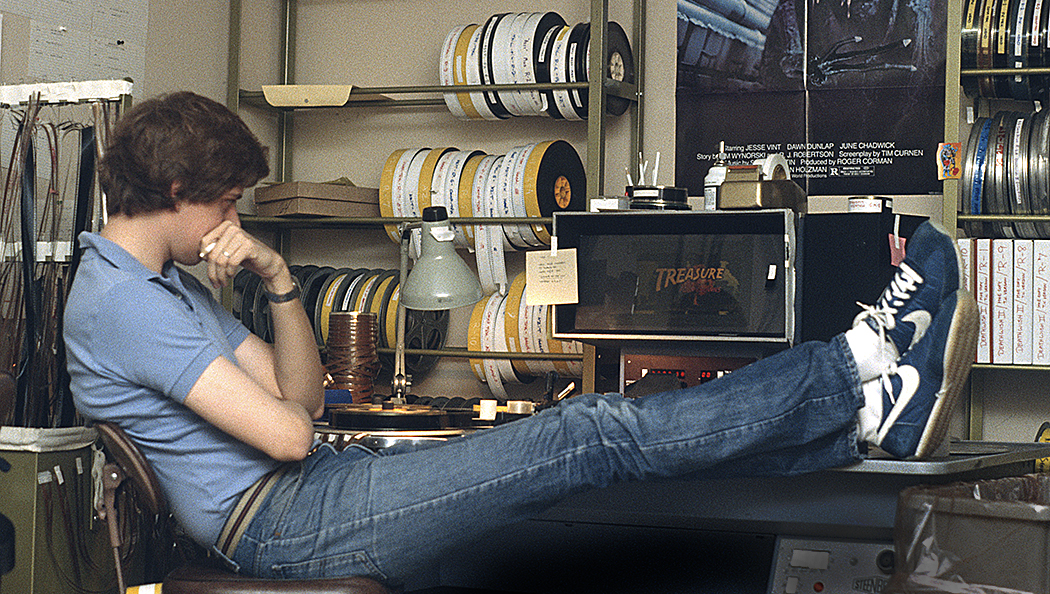
When I started out as a film editor, way back in the last century, before computers—it was still actually film and it was physically “cut”. Armed with splicers, tape, grease pencils and scribes—editing was a very tactile skill. The “art” of editing may have been in your head, but the “craft” was in your hands.
Back then, there was a tradition of experienced editors passing on what they knew to the next generation and the process hadn’t changed all that much for a good seventy years or so. In fact, the very first professional editing room I ever visited was run by a soon to retire old union pro, who spent the afternoon regaling me with stories of when he was a young assistant and the old veteran that he worked for would spin tales of the very beginning—of his time assisting the editing of silent films for Chaplin himself! For the life of me, I can’t remember that editor’s name—but everything he told me, even though it was third hand information forty years ago, is still etched in my memory. Imagine being there in the room with Charlie friggin’ Chaplin?
He told me how they made three prints of the previous day’s shoot and holding the film up to a naked lightbulb, the editor would cut the film with a pair of scissors and hang each strip of film on a hook in a trim bin and then Chaplin would make his own choices with the second print, then the assistant would carefully glue all those strips together—patiently waiting for the glue on each splice to dry, before moving to the next and then, however late into the night it got, when both Chaplin’s and the editor’s cuts were done, and having seen the choices they made, the assistant would make his own version with the third print. The next morning, Chaplin would screen the three cuts and decide which version he preferred and the process would begin again.
But, with the arrival of the Avid Media Composer in the early 90s, the cutting room changed. It was a computer revolution. Editors could work so much faster and cut many more versions and, with no pesky little bits of film to keep track of, there was less of a reason for assistants to actually be in the same room with the editor—until today, with the advent of “working remotely“, they don’t even need to be in the same city! When they left the cutting room, assistant editors were physically separated from the creative process. There was no more learning by osmosis.
I always thought that when I got to the point where I was an “old pro” like that first editor I met so many years ago, that I would be mentoring the younglings and passing on what I had learned over these many years—saying things like, “You know, in my day...” in my best Grandpa Simpson voice— but, while I had helped a few get their start in the early part of my career—I’ve spent the last dozen years of my professional life in a room at home, all by myself, posting versions over the internet—and in more than a few cases, never even meeting the people I was working for!
I miss the collaboration. I miss the camaraderie of the cutting room.
It may be incredibly indulgent to think that anyone would want to read about what I do when I’m alone in my room, (not to mention a little creepy, when you put it that way...) but, on the off chance that there’s someone just starting out, as wide-eyed anxious for any crumbs of information, as I was way back when, I’ll try to pass on a few tales of the cutting room floor—not in the usual sense of the phrase; what got cut out of a film, but what it’s like to be there. In the room where it happened. On the cutting room floor.
When I started out as a film editor, way back in the last century, before computers—it was still actually film and it was physically “cut”. Armed with splicers, tape, grease pencils and scribes—editing was a very tactile skill. The “art” of editing may have been in your head, but the “craft” was in your hands.
Back then, there was a tradition of experienced editors passing on what they knew to the next generation and the process hadn’t changed all that much for a good seventy years or so. In fact, the very first professional editing room I ever visited was run by a soon to retire old union pro, who spent the afternoon regaling me with stories of when he was a young assistant and the old veteran that he worked for would spin tales of the very beginning—of his time assisting the editing of silent films for Chaplin himself! For the life of me, I can’t remember that editor’s name—but everything he told me, even though it was third hand information forty years ago, is still etched in my memory. Imagine being there in the room with Charlie friggin’ Chaplin?
He told me how they made three prints of the previous day’s shoot and holding the film up to a naked lightbulb, the editor would cut the film with a pair of scissors and hang each strip of film on a hook in a trim bin and then Chaplin would make his own choices with the second print, then the assistant would carefully glue all those strips together—patiently waiting for the glue on each splice to dry, before moving to the next and then, however late into the night it got, when both Chaplin’s and the editor’s cuts were done, and having seen the choices they made, the assistant would make his own version with the third print. The next morning, Chaplin would screen the three cuts and decide which version he preferred and the process would begin again.
But, with the arrival of the Avid Media Composer in the early 90s, the cutting room changed. It was a computer revolution. Editors could work so much faster and cut many more versions and, with no pesky little bits of film to keep track of, there was less of a reason for assistants to actually be in the same room with the editor—until today, with the advent of “working remotely“, they don’t even need to be in the same city! When they left the cutting room, assistant editors were physically separated from the creative process. There was no more learning by osmosis.
I always thought that when I got to the point where I was an “old pro” like that first editor I met so many years ago, that I would be mentoring the younglings and passing on what I had learned over these many years—saying things like, “You know, in my day...” in my best Grandpa Simpson voice— but, while I had helped a few get their start in the early part of my career—I’ve spent the last dozen years of my professional life in a room at home, all by myself, posting versions over the internet—and in more than a few cases, never even meeting the people I was working for!
I miss the collaboration. I miss the camaraderie of the cutting room.
It may be incredibly indulgent to think that anyone would want to read about what I do when I’m alone in my room, (not to mention a little creepy, when you put it that way...) but, on the off chance that there’s someone just starting out, as wide-eyed anxious for any crumbs of information, as I was way back when, I’ll try to pass on a few tales of the cutting room floor—not in the usual sense of the phrase; what got cut out of a film, but what it’s like to be there. In the room where it happened. On the cutting room floor.